Playing with LEGO® to find your thesis topic
If you are a little further along in your studies, one specific question may keep you up at night: ‘What topic should I choose for my Bachelor’s or Master’s thesis?’
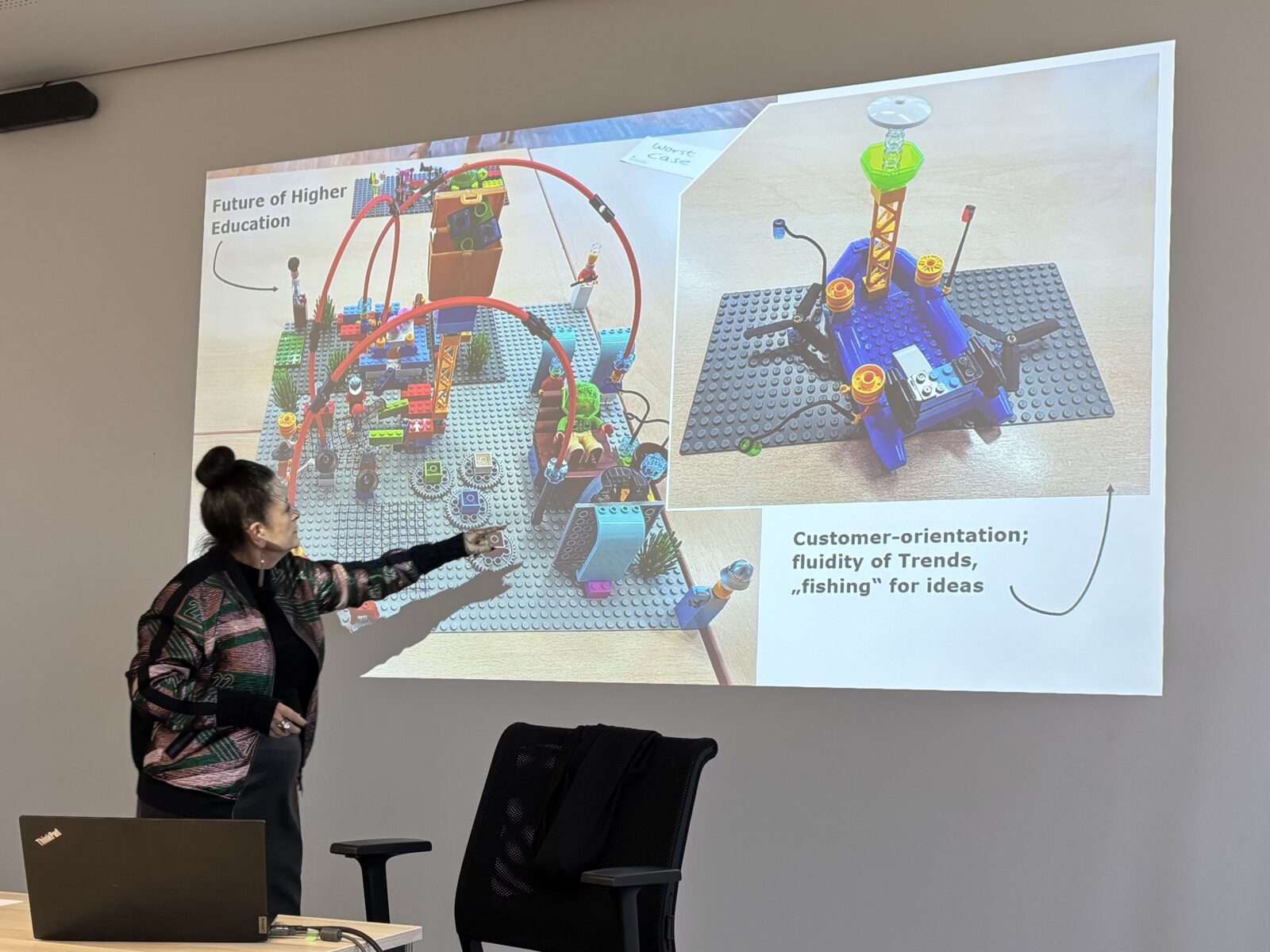
Of course, there are different ways to figure this out. Perhaps one of the more unusual approaches is using LEGO®. Yes, the LEGO® you used to play with as a child—although there is a bit more structure involved in the method you’re going to read about. It’s called LEGO® SERIOUS PLAY®, and our trained instructor Prof. Dr. Rafaela Kunz introduced it to volunteering students for its perks.
What is LEGO® SERIOUS PLAY®?
LEGO® SERIOUS PLAY® was born from a collaboration of LEGO® itself and the Institute of Management Development, officially making its debut in 2002. Its original purpose was to spark ideas to hold a stand against video games. The method’s usefulness is not contained to its origins but can be applied to all sorts of problems that need solving.
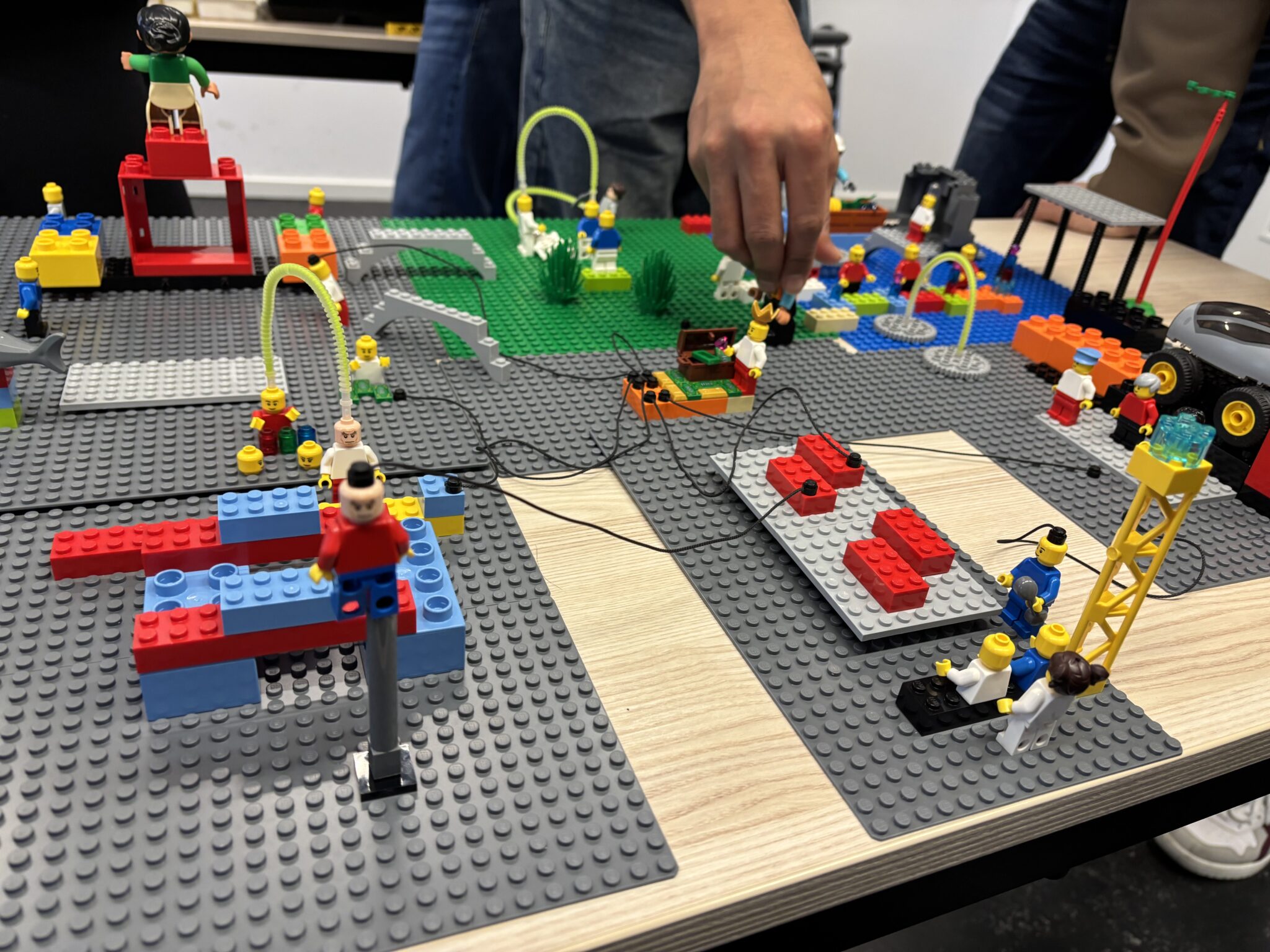
The practice consists of three main steps that lead the group from their very own singular models to a shared group model, which is put together from their builds, and eventually asks them to translate the group model into a system model.
Each step circles through the same order: build first, then share and reflect.
It is a method to simplify thought processes and ideas—because if you can’t give something a physical form, how can you expect to be able to explain it to others?
Why it works.
What makes LEGO® SERIOUS PLAY® so inviting to use is that deep knowledge of the subject(s) is not required to participate. Simplification is part of the process; you can get into the nitty-gritty research bit of it all later.
The core function of LEGO® SERIOUS PLAY® is that it helps abstract concepts and thoughts become tangible as it unlocks knowledge using hand-brain alignment. That means the practice activates areas for creativity in your brain that would normally not light up during traditional brainstorming.
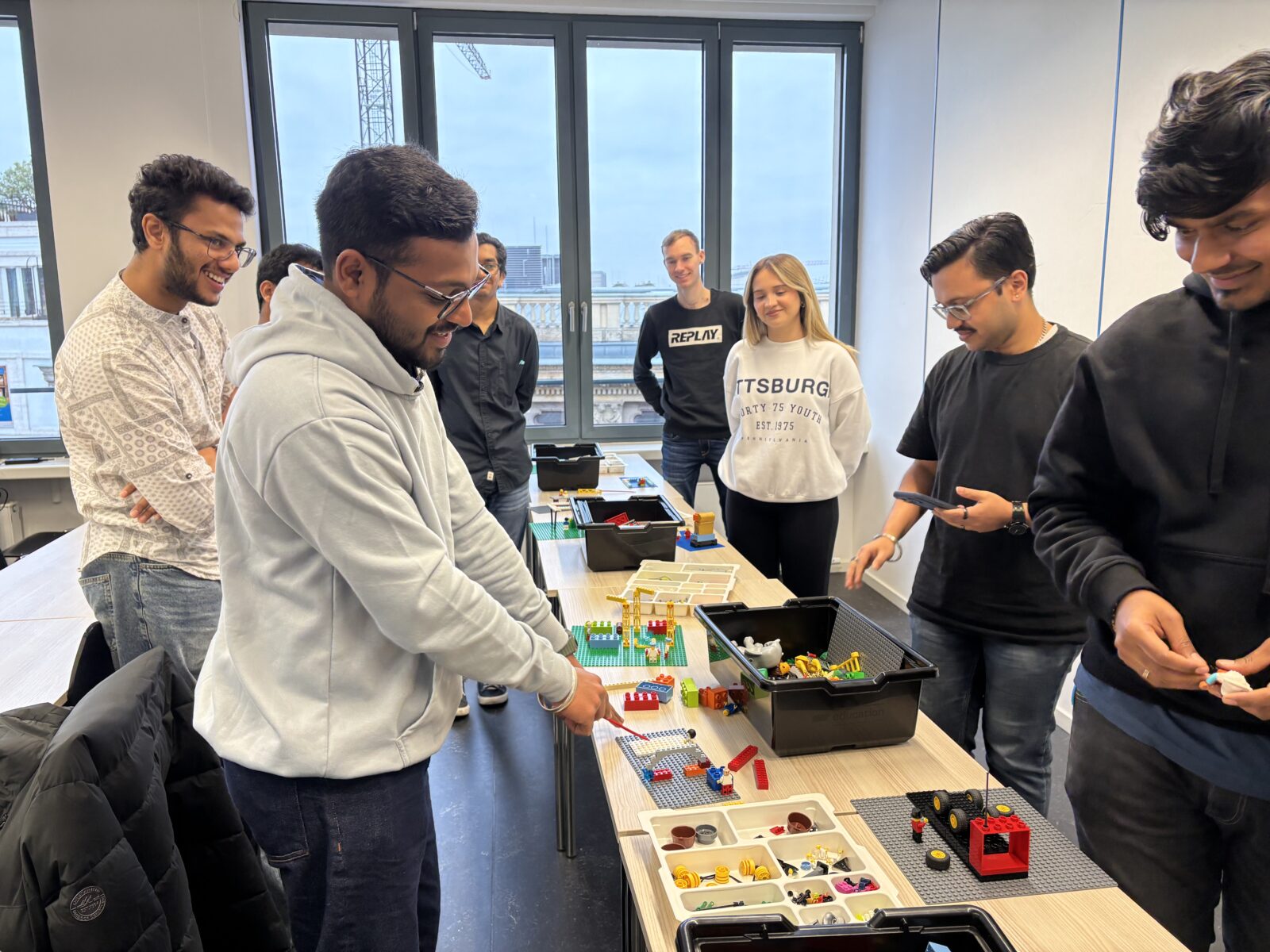
Time limits make a building strategy and reasonable simplification indispensable, furthering the development of these skills, which are immediately put to good use when the players explain the core ideas of their models to the group.
It doesn’t stop there; the practice also fulfills the goal of cultivating participatory leadership abilities, seeing as you explain the model you have built, share your insights and POV, and influence others in the discussion about where your model connects and works as a team-building exercise that lets the group get to know each other’s way of thinking.
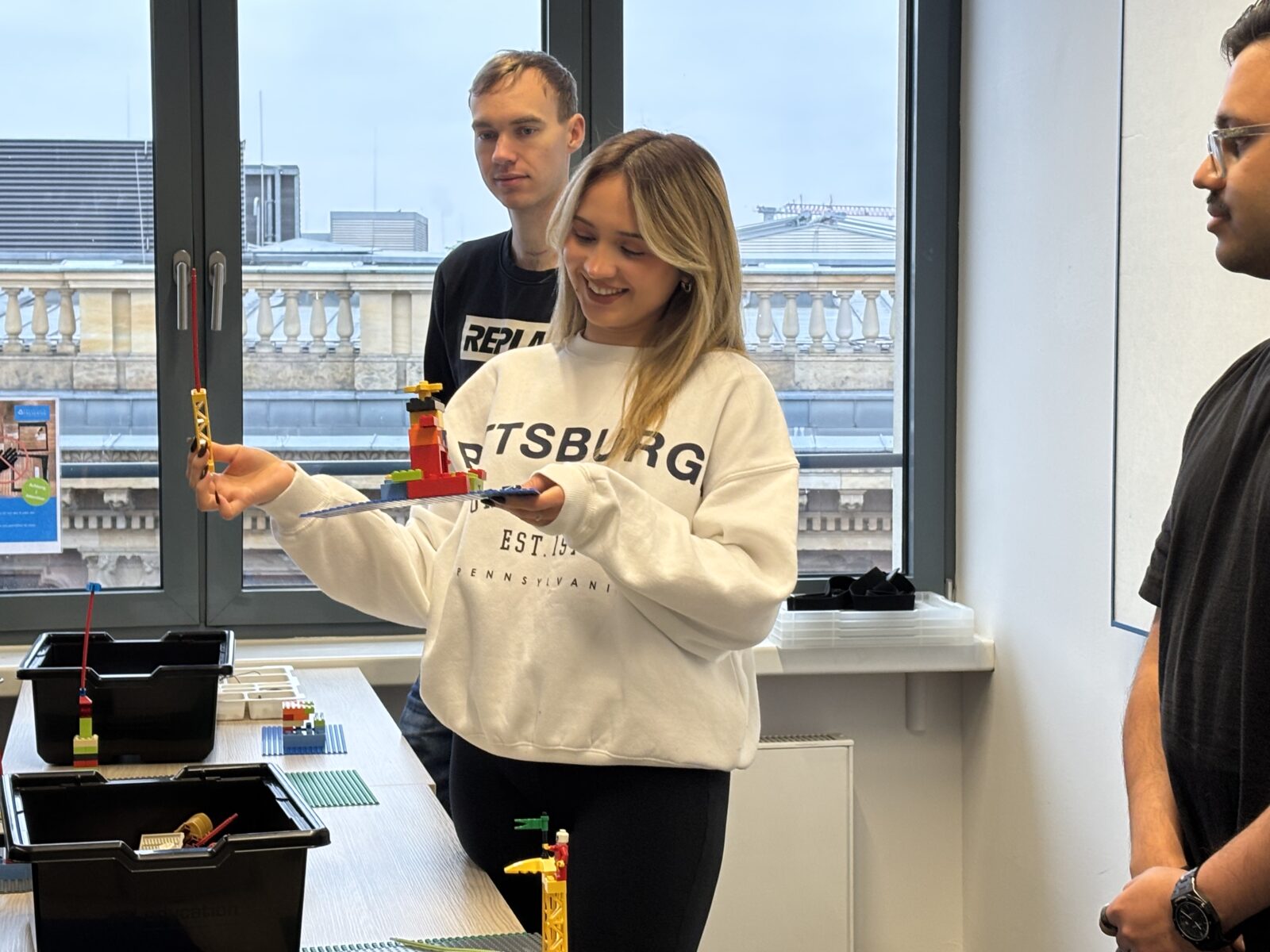
How does the HSF practice LEGO® SERIOUS PLAY®?
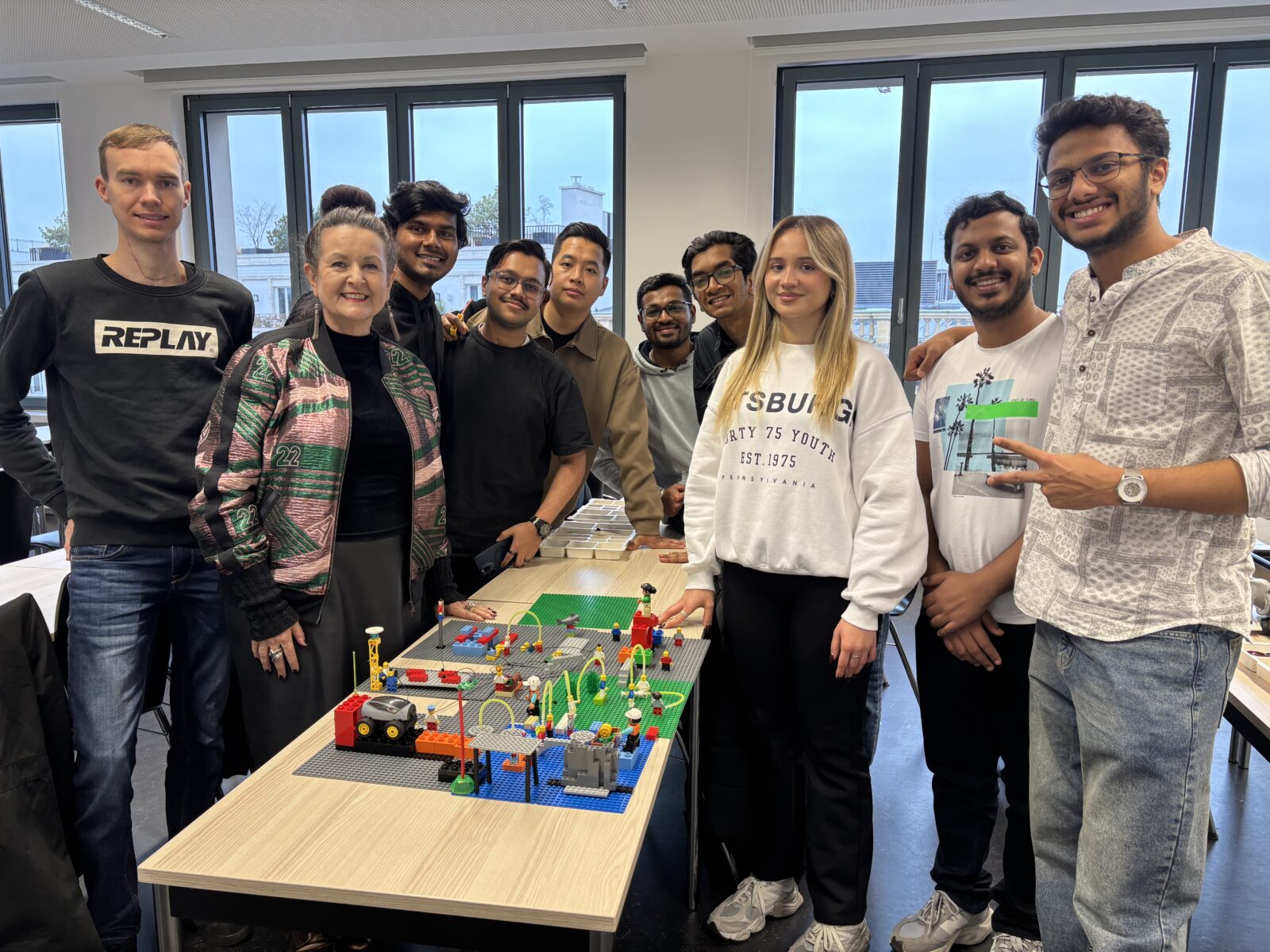
In pursuit of finding a suitable thesis topic, a group of HSF’s master students was taught to use LEGO® SERIOUS PLAY®. The participating students were in their third semester (out of four) and part of the Master Industrial Engineering and International Management program.
LEGO® SERIOUS PLAY® supports skill development important to business-related problem solving. The warm-up building exercise allowed for freestyling but not for overthinking due to the short time given. The group went through multiple iterations of question-bound model building and eventually, using various connectors, interlinked the final round of models, which resulted in a final, mutual system model.
To be able to teach LEGO® SERIOUS PLAY®, you need to pass a specific certification, which is precisely what Prof. Dr. Rafaela Kunz did. She holds the position of the Program Director for both the Master Industrial Engineering and International Management (MIEIM) and Master International Management (MIME).
As Prof. Dr. Kunz is constantly looking to improve the students’ experience with LEGO® SERIOUS PLAY® and therefore, following the session, set up an anonymous feedback round.
Rewarding the participants for their energy, synergy, and creativity, the event wrapped up with free pizza for replenishment.